


.png)
RACKEON Server Racks: Supporting Critical Data Centre Infrastructure
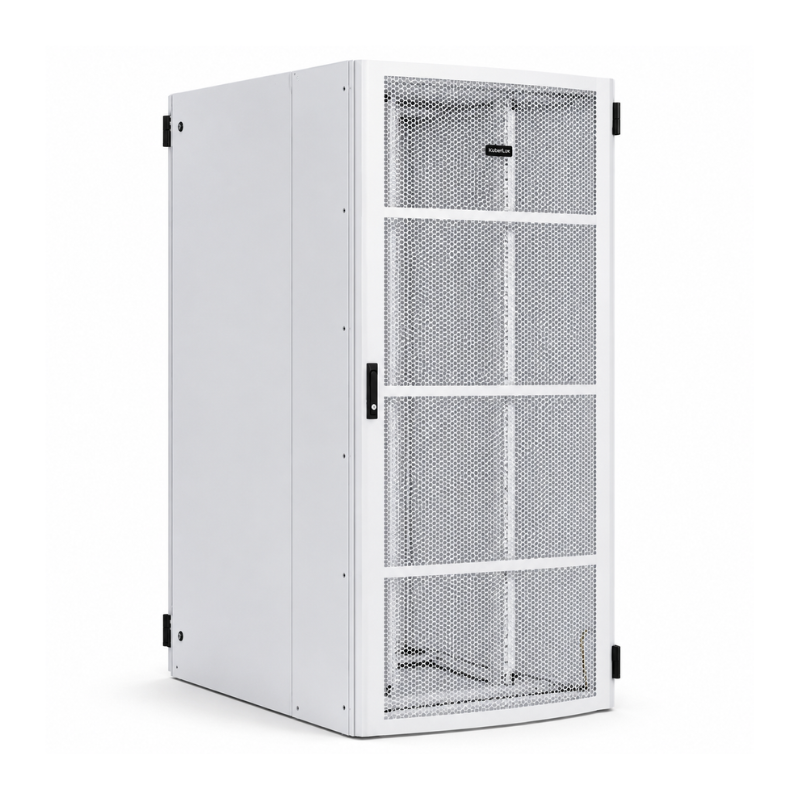
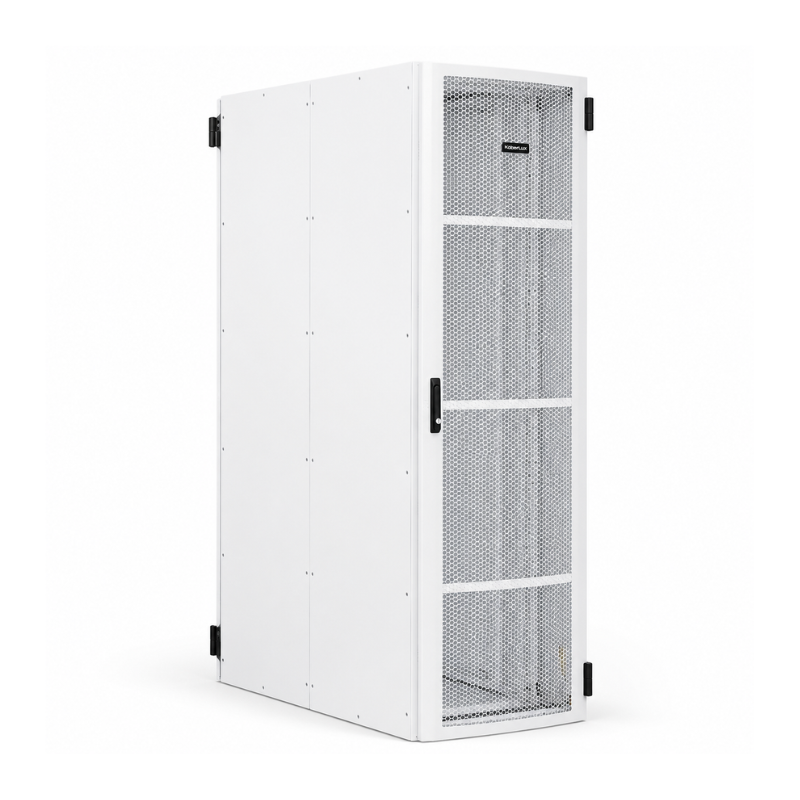
The server rack sits at the centre of critical data centre infrastructure. It must safely support increasingly dense IT equipment while maintaining airflow, power distribution, cable management, physical security and engineer access. RACKEON is designed and manufactured by Telenco as a configurable rack platform built around these operational demands.
Why the Server Rack Matters More as Data Centres Become Denser
A server rack is much more than an enclosure. It provides the physical foundation for servers, networking equipment, fibre connectivity, power distribution and the cabling that connects these systems together.
As equipment density increases, the demands placed on that foundation increase with it. More servers mean more weight and heat. Greater connectivity creates more fibre and copper cabling, while increasing power requirements place additional demands on PDU integration and internal rack space.
Poor rack design can turn these requirements into operational problems. Restricted airflow can compromise cooling, cable congestion can make maintenance difficult and poorly positioned power infrastructure can consume valuable equipment space. RACKEON is designed to address these challenges as part of the complete data centre environment.
RACKEON Configurations for Different Infrastructure Requirements
Protecting Critical Equipment Starts with Unrestricted Airflow
Cooling performance does not stop at the cooling unit. Air still has to enter the rack, pass through active equipment and leave efficiently. A rack that obstructs this airflow can undermine the wider thermal management strategy.
RACKEON front and rear doors provide up to an 85% perforation rate, supporting high levels of front-to-rear airflow through installed server and networking equipment.
The internal rack structure is also designed without intermediate supports between the upper and lower profiles. This leaves more usable internal space for airflow and cable routing rather than introducing unnecessary obstructions around critical equipment.
Critical Infrastructure Needs a Rack Engineered for the Load
Server density, networking hardware, connectivity and power equipment can create substantial rack loads. RACKEON provides up to 1500 kg static and dynamic load capacity, giving data centre teams a robust structural platform for high-density infrastructure while maintaining flexibility around how equipment is configured within the rack.
Preventing Cable Density from Becoming an Operational Problem
Fibre density continues to increase inside modern data centre racks. At the same time, copper connectivity and larger power cables still need clear, controlled routes around the installed equipment.
Without dedicated cable management, this infrastructure can begin to obstruct airflow, complicate patching and make equipment replacement more difficult.
RACKEON supports vertical and horizontal cable management, with solutions ranging from guide-ring rails and cable ladders through to finger-based management columns and coiling areas for excess fibre length.
By creating dedicated pathways for fibre, copper and power, the rack can remain more organised and accessible as connection density increases.
Integrating PDUs Without Sacrificing Valuable Equipment Space
Power distribution is another area where high-density infrastructure can compete for space. Mounting PDUs within conventional 19-inch equipment positions reduces the rack capacity available for active hardware.
RACKEON supports vertical PDU mounting within rear and 0U areas, allowing valuable 19-inch rack space to remain available for servers, switches and connectivity equipment.
Depending on the rack configuration, PDUs can be installed side by side, opposite each other or face to face. PDU mounting can also be integrated alongside cable ladders and vertical cable management, helping power and data infrastructure coexist without becoming unnecessarily congested.
Critical Infrastructure Still Needs to Be Easy to Maintain
Infrastructure availability depends not only on equipment reliability but also on how quickly engineers can safely access, diagnose and replace hardware when maintenance is required.
RACKEON doors open up to 180°, providing extensive front and rear access. Once unlocked, doors can also be assembled or removed without tools, helping engineers gain access to equipment without unnecessary complexity.
U markings are provided on both the front and rear faces of the 19-inch uprights, helping equipment positions remain clear during installation, moves, additions and changes.
A Rack That Can Adapt as Infrastructure Changes
Data centre equipment is rarely static throughout the life of the rack. Server depths change, networking platforms evolve and new connectivity or power requirements can alter the internal layout.
RACKEON 19-inch mounting uprights can be configured with different adjustment systems. Sliding variants allow adjustment in 10 mm increments, while a mechanically assisted option can reposition the rails without removing equipment already mounted to them.
This allows the rack infrastructure to adapt around changing equipment requirements rather than forcing every future installation to conform to the original rack position.
RACKEON Accessories: Build the Rack Around the Infrastructure
RACKEON is a configurable platform. Accessories can be selected around the immediate project requirement and additional components introduced as data centre infrastructure develops.
Vertical Cable Management
Guide rings, finger systems, cable ladders and coiling supports help control high-density fibre, copper and power routes.
Horizontal Cable Management
Organisers, covers, guide rings and finger systems manage patch cords and connections leaving active equipment.
PDU Mounting
Vertical PDU brackets provide flexible rear and 0U power distribution without unnecessarily consuming 19-inch space.
Air Dam Kits
Adjustable air dam solutions help close airflow gaps and support hot and cold aisle containment performance.
Blanking Panels
Tool-free blanking panels close unused equipment positions, helping prevent bypass airflow through empty rack space.
Side Panels
Fixed, hinged and locking configurations are available alongside options for cable transition between adjacent racks.
Access Control
Mechanical, keypad, RFID and remote electronic locking options can be selected around facility security requirements.
Levelling & Mobility
Levelling feet and castor options support positioning and installation requirements within the data hall.
Grounding Accessories
Grounding accessories can be incorporated into the rack configuration as part of the wider infrastructure installation.
The Rack Has to Work with the Wider Data Hall
The thermal performance of a rack cannot be considered independently from the wider hot or cold aisle strategy. Gaps within the rack row can allow air to bypass equipment and reduce containment effectiveness.
RACKEON can be integrated with air dam systems, blanking panels and head-of-row arrangements to support contained data centre configurations.
This makes it possible to consider the rack, airflow management, cable routing and row containment as parts of the same infrastructure design rather than solving each issue separately after deployment.
Protecting Access to Critical IT Equipment
Physical access control becomes increasingly important when racks contain business-critical servers, network infrastructure and connectivity.
RACKEON supports multiple locking technologies, allowing security to be configured around the requirements of the facility. Options include mechanical locking alongside electronic keypad, RFID and remote-control systems.
This allows rack-level access control to form part of the wider physical security strategy rather than operating as an isolated cabinet lock.
RACKEON Technical Standards
Designed & Manufactured as Critical Infrastructure
RACKEON is designed as an infrastructure platform rather than simply a steel enclosure. Telenco's role as designer and manufacturer allows the rack itself, equipment mounting, airflow, cable pathways, power distribution and accessories to be considered together.
The modular approach means each RACKEON configuration can be aligned with the technical requirements of the project rather than relying on a single standard cabinet for every environment.
Accessories can also be introduced as infrastructure develops, providing data centre operators with a rack platform capable of adapting to changing equipment, power, connectivity and operational requirements.
RACKEON for Critical Data Centre Infrastructure
From high-density server deployment and airflow management to fibre connectivity, power distribution, physical security and containment, Telenco can configure RACKEON around the critical infrastructure requirements of your data centre project.
Enquire About RACKEON